
Want to declutter paper and digital clutter without feeling overwhelmed?
Paper clutter can pile up so quietly.
A few pieces of mail land on the counter. Receipts get tucked into a purse. Bills need attention. Important papers get mixed in with things we no longer need.
Digital clutter can feel the same way. Emails pile up, downloads collect, photos multiply, and files get saved in places we can’t remember.
The good news is that you do not have to deal with all of it today.
Paper clutter can pile up so quietly.
A few pieces of mail land on the counter. Receipts get tucked into a purse. Bills need attention. Important papers get mixed in with things we no longer need.
Digital clutter can feel the same way. Emails pile up, downloads collect, photos multiply, and files get saved in places we can’t remember.
The good news is that you do not have to deal with all of it today.
Paper clutter can pile up so quietly.
A few pieces of mail land on the counter. Receipts get tucked into a purse. Bills need attention. Important papers get mixed in with things we no longer need.
Then one day we look around and wonder:
How did all this paper get here?
Digital clutter can feel the same way.
Emails pile up. Downloads collect. Photos multiply. Files get saved in places we can’t remember.
Before long, both our paper and digital lives can feel harder to manage than they need to be.
The good news is this:
You do not have to deal with all of it today.
That is where the Marilyn’s Way approach comes in.
Start With One Paper Hot Spot
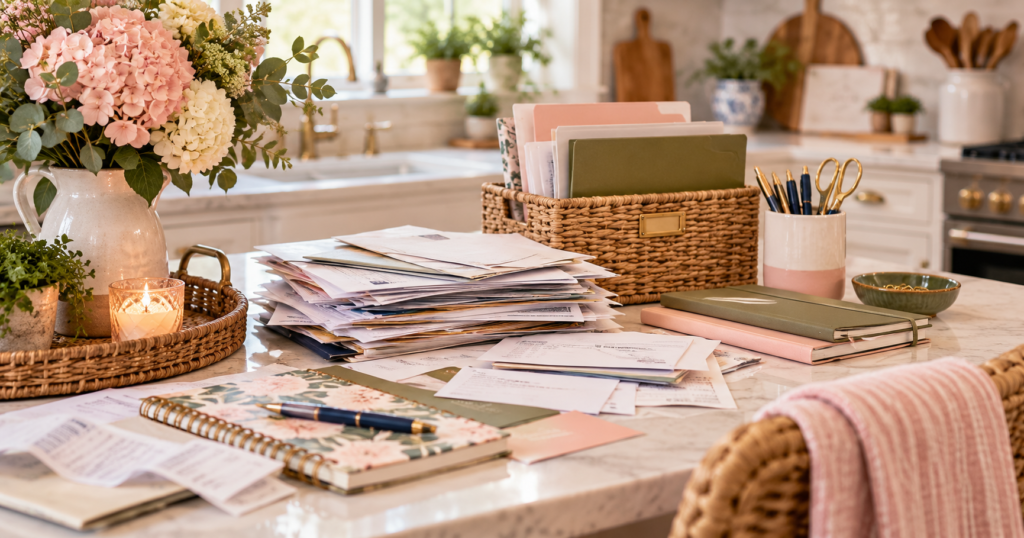
Do not pull every file, receipt, and piece of paperwork out at once.
Start with one small area.
Maybe it’s:
- the kitchen counter
- a desk
- the dining room table
- your purse
- a drawer
- one folder
- one small stack of mail
Choose one place and begin there.
Paper clutter happens in layers, so it makes sense to declutter it in layers too.
Use Four Simple Categories
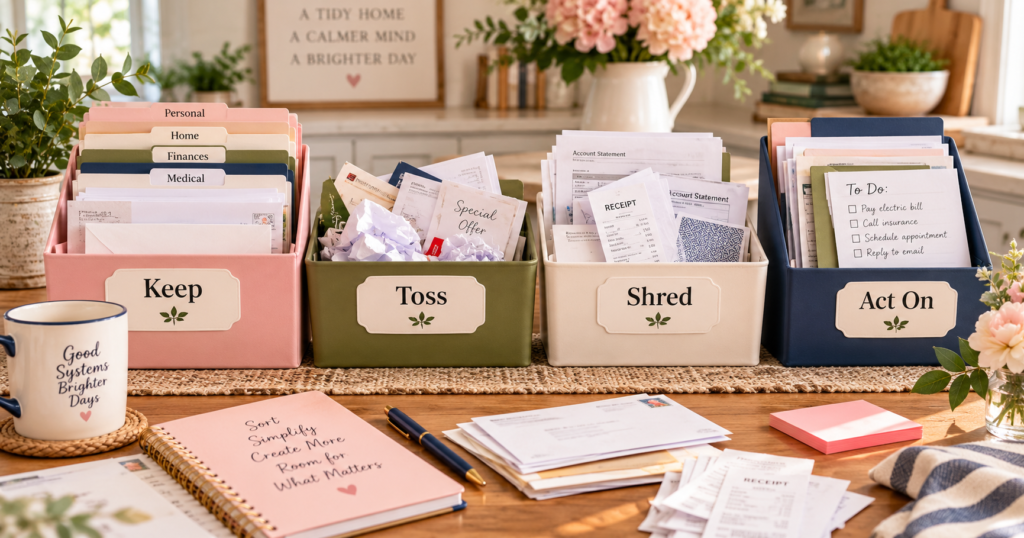
When you start sorting papers, keep the decisions simple.
Use these four categories:
Keep
Paperwork you truly need to keep.
Toss
Paper you no longer need and that doesn’t contain sensitive information.
Shred
Documents containing personal or financial information that should be destroyed securely.
Act On
Bills, forms, appointments, or anything else that requires you to do something.
You do not need an elaborate filing system before you begin.
First, make the decisions.
Don’t Let “I Might Need This” Stop You
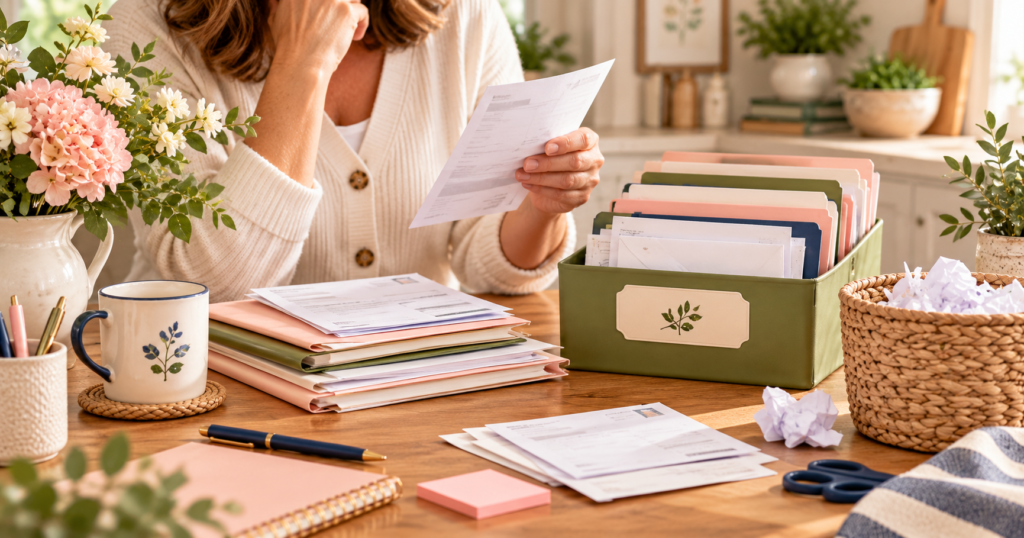
One reason paper clutter grows is because we are afraid to get rid of something important.
That’s understandable.
But sometimes we keep papers simply because we don’t know what else to do with them.
If you struggle with knowing what paperwork you can let go of, I wrote Paper Clutter Smackdown! Papers You Can Get Rid Of Today! to help with that decision-making process.
It can help when your biggest question is:
“Can I safely get rid of this?”
Create One Place for Incoming Paper
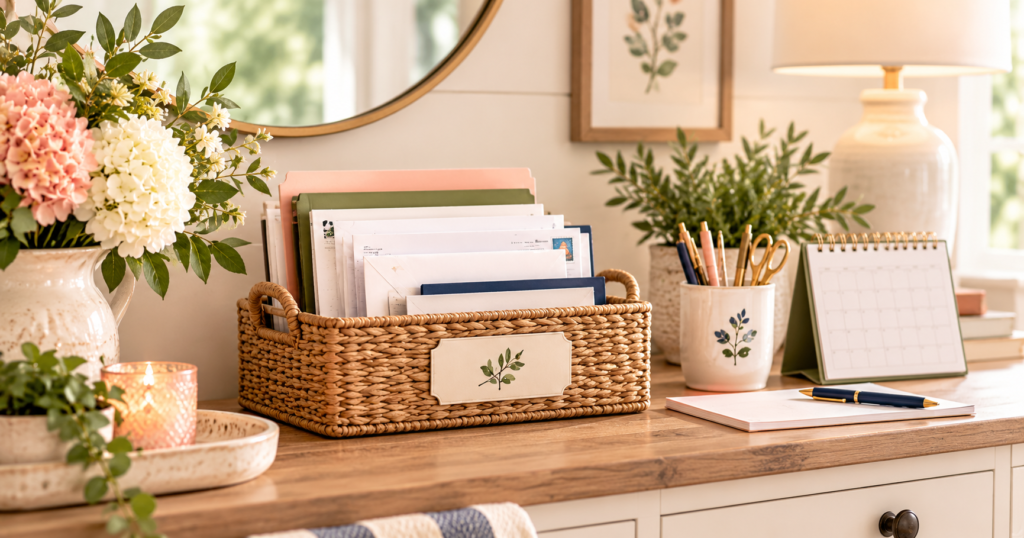
One of the easiest ways to reduce paper clutter is to stop giving paper multiple landing spots.
Choose one place for incoming mail and paperwork.
That could be:
- a basket
- a file tray
- a wall pocket
- one section of your desk
The important part is consistency.
When paper comes into your home, it has somewhere to go.
Then once or twice a week, deal with what’s there.
Use a 5- or 15-Minute Paper Reset
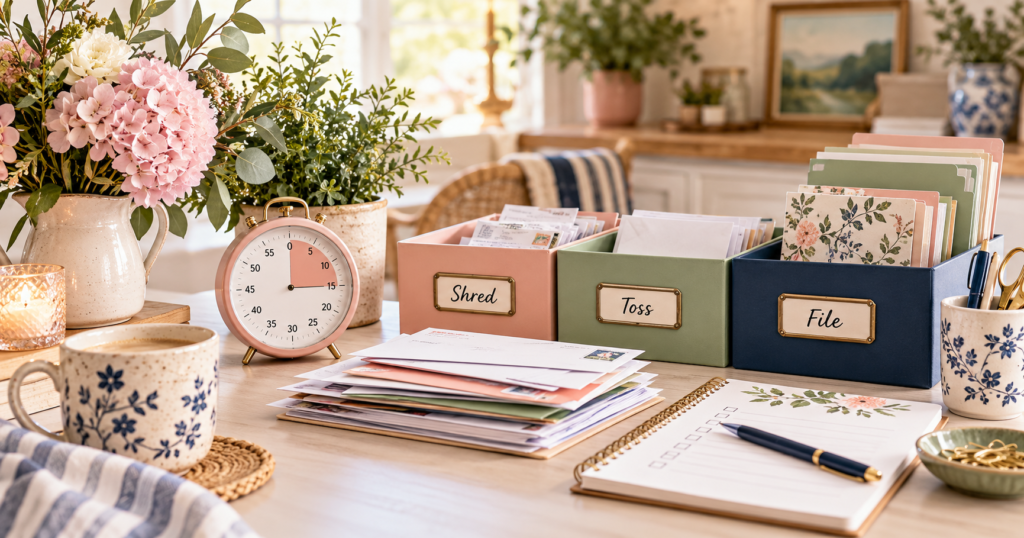
You do not need an entire afternoon to make progress.
Set a timer for five or fifteen minutes.
During that time:
- open mail
- toss junk
- shred old papers
- file what belongs somewhere else
- put action items together
When the timer goes off, you can stop.
Some days you may want to keep going.
Some days you won’t.
Both are okay.
The goal is progress.
Don’t Forget the Digital Clutter

Paper clutter isn’t always paper anymore.
Digital clutter can take up just as much mental space.
Start small there too.
You might:
- unsubscribe from five emails
- delete 20 old messages
- clean out your Downloads folder
- delete duplicate photos
- organize one digital folder
- rename files so you can actually find them later
Do not try to organize your entire computer or phone in one sitting.
The same rule applies:
One folder. One category. One small step.
Want a Step-by-Step Plan?
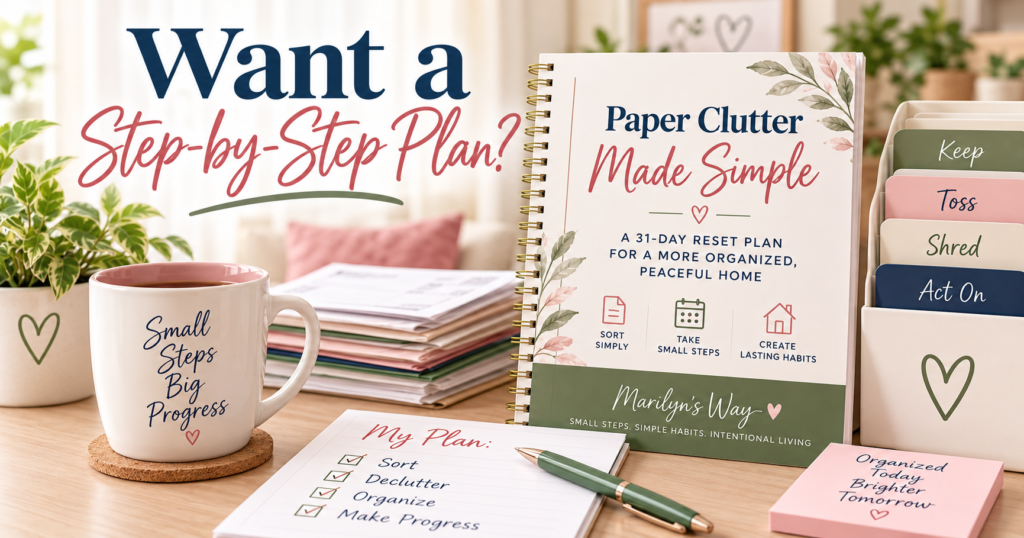
If you want more structure, I created the Paper Clutter Made Simple Workbook to help you work through your paper and digital clutter one small step at a time.
Inside, you’ll find:
- a 31-Day Paper Clutter Reset Calendar
- paper-sorting worksheets
- a paperwork reference guide
- paper hot spot help
- digital decluttering pages
- a weekly paper reset
- reflection and notes pages
The workbook is for the person who wants a plan to follow without feeling like they have to tackle everything at once.
Get the Paper Clutter Made Simple Workbook
Create a Simple Weekly Paper Routine

Once the biggest piles begin to shrink, the goal is to keep them from coming back.
Choose one day each week to:
- open mail
- pay or schedule bills
- file important paperwork
- shred what you no longer need
- clear the paper hot spots
This does not need to become a major project.
Ten or fifteen minutes of regular attention can make a big difference.
Paper Clutter Happens in Layers
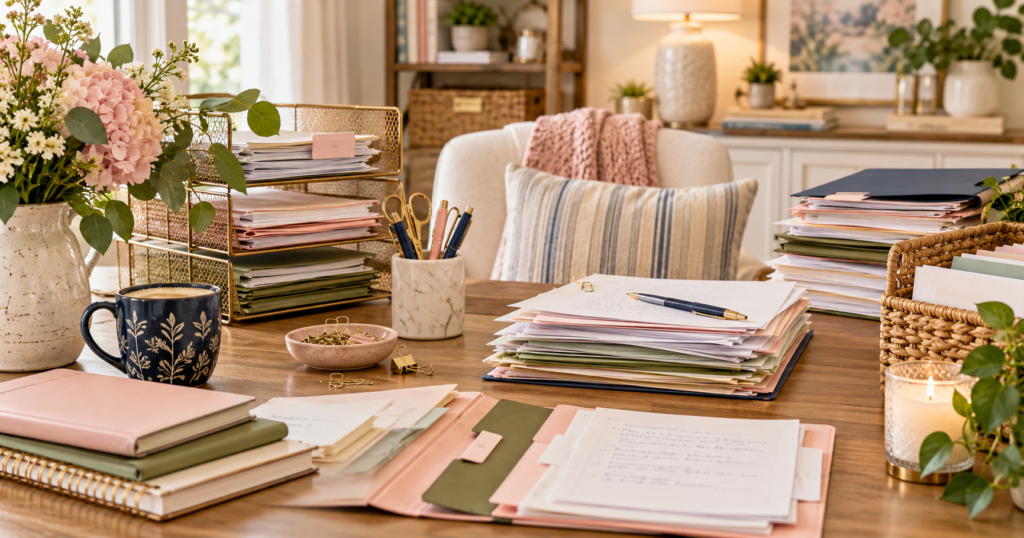
The easiest way to declutter paper and digital clutter is to work in small layers instead of trying to organize everything at once. You probably did not create all of your paper clutter in one day.
You do not have to eliminate it in one day either.
Start with one pile.
Make a few decisions.
Create one simple routine.
Then come back and do another layer.
That is how we make our homes easier to manage without turning decluttering into another overwhelming project.
Small Steps. Simple Habits. Intentional Living.
Marilyn ❤️
Need More Help With Paper Clutter?
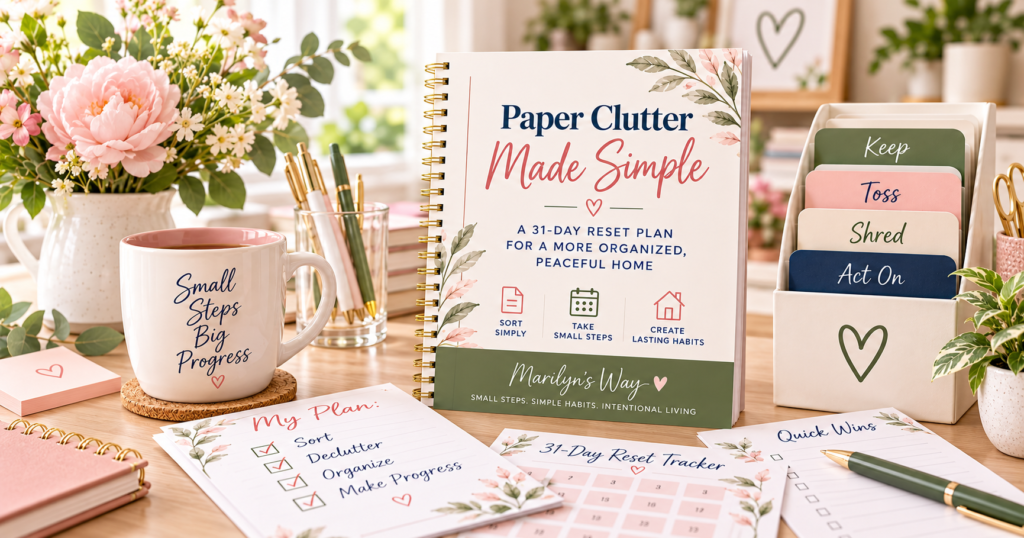
The Paper Clutter Made Simple Workbook gives you a clear, printable plan so you don’t have to figure out what to do next.


